Best Hostinger Alternative for Managed WordPress Hosting in 2026
August 20, 2025 by Nitish


August 20, 2025 by Nitish


Website owners searching for a Hostinger alternative in 2026 are usually moving beyond entry-level shared hosting and focusing on performance consistency. Modern websites need stable server response during traffic spikes, predictable scaling behavior, and infrastructure designed for dynamic applications. Hosting decisions today are driven more by workload stability than by lowest monthly pricing.
A strong Hostinger alternative should be evaluated based on real workload performance, not marketing specs. Key factors include PHP worker concurrency handling, database query speed, caching efficiency, and storage architecture such as NVMe. For WordPress and WooCommerce sites, backend processing speed directly impacts SEO performance, Core Web Vitals, and conversion rates.
Pricing predictability is another major reason users search for Hostinger alternatives. Many growing websites now prioritize transparent renewal pricing and infrastructure cost stability over promotional discounts. This matters especially for agencies, SaaS products, and eCommerce stores that need hosting costs to scale gradually with traffic growth.
From an infrastructure perspective, modern hosting platforms are shifting toward containerized environments, edge caching layers, and auto-scaling compute resources. These technologies reduce latency fluctuations, improve uptime stability, and help maintain consistent Core Web Vitals performance. This directly supports search visibility, crawl efficiency, and user experience metrics.
Many website owners start with Hostinger because it offers fast setup and low entry pricing. However, as websites grow, hosting requirements shift toward consistent server response time, stronger security layers, and predictable performance during traffic spikes. At that stage, users often start evaluating a long-term best Hostinger alternative for managed WordPress hosting based on workload stability rather than entry-level affordability.
Hostinger can perform well for low to moderate traffic websites, but performance consistency may decline as concurrent visitors increase. Slower backend processing, database query delays, and resource contention can appear during peak usage. For business websites, even small latency increases can impact conversions, search rankings, and user session duration.
Many hosting plans advertise unlimited bandwidth or storage, but practical limits still exist at the CPU, RAM, and execution level. When websites exceed fair usage thresholds, performance throttling can occur. For media-heavy websites or high-traffic blogs, this can lead to slower page rendering or temporary service slowdowns.
Basic hosting support often focuses on general troubleshooting rather than deep infrastructure-level optimization. During critical website issues, slower response times or multiple escalation layers can delay resolution. Businesses now prioritize root-cause diagnosis and infrastructure-aware support instead of simple ticket replies.
Entry pricing in hosting often looks attractive, especially when tied to long-term contracts. However, the total cost of ownership can increase over time due to renewal price jumps, paid add-ons for backups or security, and higher upgrade costs when traffic grows. Smart buyers now calculate hosting value over multiple years instead of focusing only on first-year discounts, helping them avoid unexpected budget increases later.
Shared hosting distributes server resources across many websites simultaneously. During traffic surges or heavy background processing on nearby accounts, performance variance can occur. For performance-focused websites, consistent resource allocation is now more valuable than shared infrastructure savings.
Entry-level hosting is built for quick launches but often limits deeper infrastructure control. As websites grow, they typically need isolated environments, flexible scaling, and modern deployment support. Platforms built on containerized workloads and automated resource scaling help maintain stable performance as traffic and application complexity increase.
In 2026, buyers are no longer choosing hosting based only on speed benchmarks. Instead, they measure performance consistency under real traffic conditions. Predictable load speed, stable uptime behavior, and consistent backend response time are now core decision factors.
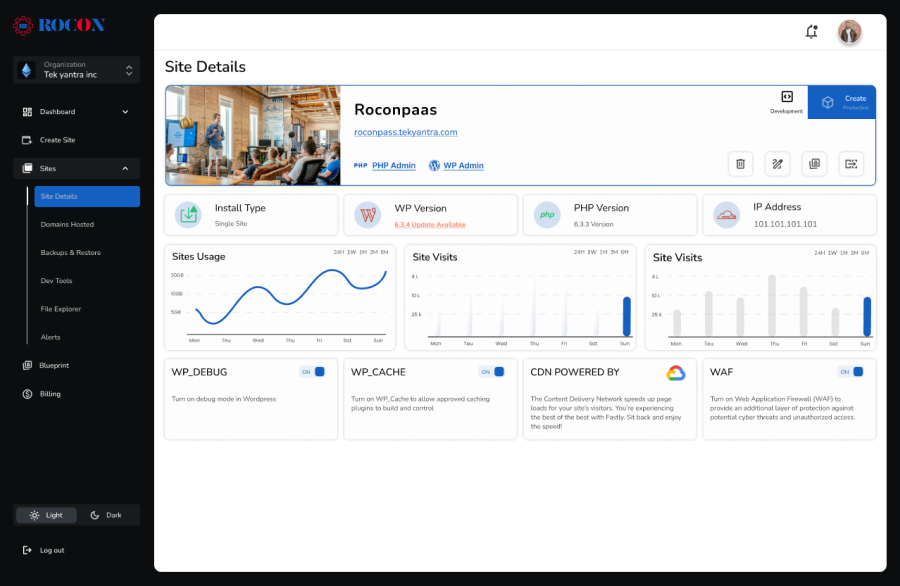
Rocon is a next-generation Managed WordPress Hosting Platform (PaaS) built for speed, reliability, and scalability. Unlike traditional shared hosting providers, it uses container-based architecture to isolate each site for dedicated performance — no shared resources, no slowdowns, and no artificial limits.
If you’re evaluating modern hosting options beyond Hostinger, platforms built on advanced infrastructure, faster load delivery, and automated management are becoming the preferred choice for growing websites and businesses.
Rocon is built for agencies, e-commerce stores, and high-traffic WordPress websites that need both power and simplicity. With a built-in CDN, intelligent caching layers, and automated scaling, websites stay fast and stable even during sudden traffic spikes.
It’s more than a hosting provider; it operates as a complete performance ecosystem designed to make WordPress hosting efficient, predictable, and easy to manage.

With speed, security, scalability, and intelligent automation, Rocon beats Hostinger and other traditional hosts. It’s for serious WordPress users, digital agencies, and businesses that value long-term performance and reliability over entry-level hosting.

Upgrade to Rocon container-powered WordPress hosting for real speed, effortless scalability, and enterprise-level security — starting at only $1.99/month.

Bluehost is one of the most well-known hosting companies globally, powering millions of websites since 2003. As an officially recommended provider by WordPress.org, Bluehost is a reliable, beginner-friendly platform for small businesses and WordPress users.
It’s ideal for anyone looking for a Hostinger alternative for managed WordPress hosting that balances ease of use, solid performance, and long-standing industry credibility. Bluehost provides a strong foundation for WordPress sites, blogs, and small eCommerce stores.
It offers one-click WordPress installation, domain management, and automated updates, making setup and site management simple even for users with limited technical knowledge. It also provides scalable plans, so you won’t need to migrate your site as your traffic grows.
With its simplicity, reliability, and stable performance, Bluehost is a strong Hostinger alternative for personal sites, small businesses, and beginner WordPress projects.
Also Read: Best Bluehost Alternatives in 2026

DreamHost is a well-established hosting company known for its focus on privacy, transparency, and developer-friendly tools. Founded in 1997, DreamHost powers over 1.5 million websites worldwide and is officially recommended by WordPress.org.
It’s a strong choice for users looking for a Hostinger alternative with reliable uptime, solid WordPress support, and added privacy protection. DreamHost is ideal for developers, bloggers, and businesses that want flexibility and control.
They offer managed WordPress hosting through DreamPress, which includes caching, automatic updates, and on-demand backups. While DreamHost is dependable, its shared hosting may slow under heavy traffic compared to newer hosting architectures.
DreamHost is a reliable, privacy-focused hosting provider and a strong Hostinger alternative for users who need flexibility, transparency, and WordPress compatibility.
Also Read: Best DreamHost Alternatives for Reliable Hosting

SiteGround is one of the most recognized hosting companies, known for performance, reliability, and award-winning support. It hosts over 2 million domains worldwide and is officially recommended by WordPress.org, making it a strong choice for users who value speed, security, and simplicity.
If you’re looking for a Hostinger alternative with strong uptime, fast support, and cloud infrastructure, SiteGround is a solid option — especially for small to medium-sized WordPress sites. It’s designed to deliver a hassle-free hosting experience, whether you run a personal blog, a growing business website, or an online store.
SiteGround runs on Google Cloud infrastructure, providing strong reliability and scalability. It includes automated WordPress updates, advanced caching tools, and built-in optimization features to improve performance and page speed. Its user-friendly dashboard, one-click staging, and developer tools make WordPress management easy for both beginners and professionals.
Overall, SiteGround is a stable, high-performance hosting provider that blends managed simplicity with enterprise-level infrastructure — a strong choice for users who want quality and peace of mind.
SiteGround is ideal for users who want a reliable, secure, and performance-focused hosting solution with stable infrastructure and expert support.
Also Read: Best SiteGround Alternatives 2026

A2 Hosting (now part of Hosting.com) has been a performance-focused hosting company since 2001, trusted by developers, agencies, and advanced users. Known for speed optimization, reliability, and developer-first tools, it offers strong control over website environments. Its continued focus on performance tuning, edge delivery, and developer automation keeps it relevant in 2026’s speed-driven hosting landscape.
When comparing options as a Hostinger alternative, A2 Hosting stands out for high-speed servers, flexible configurations, and scalable hosting solutions. Whether you run a small WordPress blog, manage multiple client sites, or deploy complex web apps, the platform provides the performance and flexibility needed for modern workloads.
From shared hosting and managed WordPress plans to VPS and dedicated servers, A2 Hosting supports projects of all sizes. Its developer-friendly environment supports multiple languages, SSH, and staging workflows, helping teams build, test, and deploy faster. For users prioritizing speed, control, and scalability, it remains a dependable industry option.
A2 Hosting is ideal for developers and technical users who want high-performance infrastructure, strong customization, and speed-focused hosting built for modern web demands.
Also Read: Best A2 Hosting Alternatives 2026

Cloudways is a managed cloud hosting platform that lets users deploy websites across leading cloud providers like AWS, Google Cloud, and DigitalOcean. It’s built for businesses, developers, and agencies that want cloud infrastructure flexibility with managed hosting simplicity. With Cloudways, you get enterprise-level cloud performance with easy scalability and streamlined management.
Unlike traditional web hosts, Cloudways removes the complexity of manual server setup and maintenance. You don’t need to handle configurations, updates, or security patching — everything is managed for you. This makes it ideal for teams focused on growth, performance optimization, and application delivery rather than server administration.
If you’re exploring options beyond Hostinger, Cloudways stands out with true cloud infrastructure, built-in caching, automated backups, and high-speed performance. It scales with business growth and helps maintain strong uptime and security. Whether running WordPress, eCommerce stores, or custom applications, Cloudways offers a balanced mix of power, flexibility, and ease of use.
Cloudways is ideal for teams needing cloud flexibility, strong performance, and managed convenience — making it a solid choice for growing businesses and developer-focused projects.
Also Read: Best Cloudways Alternatives 2026

Kinsta is a premium managed WordPress hosting provider built for businesses, agencies, and developers who need high performance and reliability. Running on Google Cloud C2 and C3D infrastructure, it delivers exceptional speed, strong security, and a fully managed environment for WordPress sites.
Its focus on performance, scalability, and developer tooling makes it a strong option beyond Hostinger for enterprise-level hosting without operational complexity.
When evaluating modern hosting platforms, Kinsta stands out with advanced caching, edge delivery, and a global network of 300+ PoPs that reduce TTFB and improve worldwide load speed. Whether running a small blog, managing multiple client sites, or scaling a high-traffic eCommerce store, its infrastructure is built to handle growth without performance bottlenecks.
Kinsta plans are designed for scale, including one-click staging, daily automated backups, free SSL, and an integrated CDN. Developers benefit from SSH and SFTP access, WP-CLI, Git integration, and multiple PHP versions, providing full environment control while keeping complex configurations simple to manage.
Kinsta is ideal for businesses, agencies, and developers seeking premium, high-performance managed hosting with global reach and enterprise-grade tools for efficient scaling.
Also Read: Kinsta Alternatives That Agencies Actually Love in 2026

Namecheap is a budget-friendly hosting provider trusted by individuals, small businesses, and bloggers who need reliable hosting without high costs. Known for affordable plans and strong domain registration services, Namecheap provides a simple and easy-to-use environment, making it a solid Hostinger alternative for budget-conscious users. Its focus on simplicity, reliability, and value makes it ideal for beginners or smaller websites.
Namecheap stands out with plans starting at just $1.98/month, making it appealing for those who need essentials at minimal cost. Whether running a personal blog, small business site, or multiple client projects, Namecheap’s hosting provides enough flexibility and scalability to grow online over time.
Namecheap offers shared hosting, VPS, and dedicated servers for projects of any size. The control panel is user-friendly, with one-click WordPress installation and management, so even non-technical users can handle their sites. Despite being budget-friendly, Namecheap delivers reliable performance, security, and uptime across all plans.
Namecheap is perfect for users seeking a cost-effective Hostinger alternative that doesn’t compromise on essential hosting features, performance, or reliability, making it a great choice for beginners and small website owners.
Also Read: Best Namecheap Alternatives in 2026

WP Engine has long been a premium managed WordPress hosting provider, trusted by developers, agencies, and enterprise clients who need a high-performance hosting environment.
Known for its developer-focused features, reliable infrastructure, and optimized WordPress setup, WP Engine is an ideal alternative for users seeking more control, speed, and scalability than budget hosting. Its focus on innovation and expert developer support makes it a top choice for professionals managing multiple WordPress sites.
WP Engine stands out with its full suite of tools, including staging environments, Git integration, and advanced caching. Whether building small client sites, running high-traffic blogs, or managing large e-commerce stores, WP Engine offers the infrastructure and features needed for consistent performance and reliability. While slightly more expensive than some competitors, the added value in speed, stability, and developer support often justifies the cost.
WP Engine provides fully managed WordPress hosting with automatic updates, daily backups, free SSL, and an integrated CDN. Developers have access to SSH, SFTP, WP-CLI, and performance testing tools, giving full control while maintaining security and stability. Agencies and professionals also benefit from analytics and premium tools to monitor and optimize site performance.
WP Engine is perfect for developers, agencies, and business owners looking for a high-performance Hostinger alternative with enterprise-grade reliability, expert support, and a robust ecosystem of tools.
Also Read: WP Engine Alternatives for Faster WordPress Hosting
| Hosting Provider | Uptime Guarantee | Storage | Best For | Standout Feature |
|---|---|---|---|---|
| Rocon | 99.99% | NVMe SSD, scalable | Agencies, eCommerce stores, high-traffic WordPress sites | Container-based architecture + auto-scaling for lightning-fast performance |
| Bluehost | 99.9% | NVMe SSD, scalable | Serious WordPress users & small businesses | AI-powered website builder + NVMe SSD storage for high-speed performance |
| SiteGround | 99.9% | 10–40 GB SSD | Small to medium WordPress sites | Outstanding customer support + Google Cloud infrastructure |
| DreamHost | 100% | 50 GB+ SSD | Privacy-focused site owners & developers | 100% uptime guarantee + strong privacy and security tools |
| A2 Hosting | 99.9% | Unlimited SSD (Turbo plans) | High-traffic websites & developers | Turbo servers up to 20x faster + developer-friendly tools |
| Cloudways | 99.99% | Depends on cloud provider | Growing businesses & developers | Managed cloud hosting on AWS/Google/DigitalOcean + scalable resources |
| Kinsta | 99.99% | 10–30 GB SSD (Starter plan) | Premium WordPress sites & agencies | Google Cloud C2/C3D servers + edge caching + global CDN for speed |
| Namecheap | 99.9% | 20–50 GB SSD | Budget-conscious beginners & small sites | Affordable hosting starting at $1.98/month + free domain registration |
| WP Engine | 99.99% | 10–50 GB SSD (Startup plan) | Developers, agencies, and high-traffic WordPress sites | Advanced developer tools + staging environments + EverCache technology |
Key Takeaways:
Choosing a reliable hosting provider shouldn’t be guesswork. We tested over 50 hosting companies to identify the top Hostinger alternatives. Our evaluation focused on real-world hosting needs, from speed and uptime to usability, features, and overall value.
We compared well-known providers across performance, scalability, pricing, and customer experience. After thorough testing, we shortlisted the top five platforms that stood out for stability, speed, and long-term reliability.
User experience is critical. We assessed how simple it is to set up websites, manage domains, handle backups, and install WordPress. While some use traditional cPanel dashboards, others, like Rocon, offer modern, intuitive interfaces that save time and simplify management for beginners and pros alike.
We looked at the completeness of each host’s feature set, including SSL, daily backups, email, CDN, and staging environments. Rocon, for example, provides these essentials at no extra cost, giving users enterprise-grade tools from day one.
Affordable hosting doesn’t always equal value. We compared initial pricing, renewal rates, and included resources. Many hosts hike prices after the first year, while Rocon maintains transparent, predictable pricing without hidden fees.
Speed and uptime are non-negotiable. We ran performance tests measuring server response, uptime consistency, and handling of traffic spikes. Traditional shared hosting struggled under load, while Rocon’s container-based architecture delivered fast, stable performance consistently.
After testing, monitoring, and analysis, we identified the most reliable Hostinger alternatives. Rocon emerged as the top choice, offering the ideal balance of speed, performance, usability, and transparency for users ready to migrate from Hostinger.
| Feature | Rocon (Best Choice) | Hostinger |
| Performance | Ultra-fast (Container-based) | Decent (Shared hosting) |
| Security | Advanced security (DDoS + Malware Protection) | Basic security |
| Customer Support | 24/7 WordPress Experts | Limited support |
| Scalability | Flexible & auto-scaling | Limited options |
| Control Panel | Easy-to-use UI | Cluttered interface |
| Pricing | Affordable for businesses | Cheaper, but lacks performance |
| Best For | Agencies, Businesses, Developers | Beginners, Basic Sites |
Want the best WordPress hosting? Try Rocon today! Get Started Today
Migrating from Hostinger may seem simple, but hidden risks can cause downtime, SEO drops, broken links, or lost emails. Understanding these pitfalls is key to a smooth transition.
Hostinger’s custom email setup can cause users to lose access to old emails during migration.
Solution: We securely move email accounts or help switch to Google Workspace, ensuring no disruption.
Incorrect DNS settings in Hostinger’s hPanel can lead to website downtime.
Solution: Our team pre-configures DNS and tests propagation to ensure your site stays live.
Some migrations trigger broken characters or 500 errors due to database mismatches.
Solution: Rocon tests databases in a sandboxed environment, fixing encoding issues before going live.
Permalinks, redirects, and canonical tags may not transfer properly, harming rankings.
Solution: We preserve all SEO-critical settings, including 301 redirects and canonical URLs.
Hostinger’s PHP settings can hide plugin errors that appear after migration.
Solution: We test all plugins and themes in a secure staging environment, preventing errors post-migration.
With Rocon, migrating from Hostinger is 100% free, zero downtime, SEO-safe, and fully managed — perfect for WordPress, WooCommerce, and high-traffic sites.
Some users have reported that Hostinger’s shared preview domains, designed for development, can be misused for phishing or scam sites. Because multiple previews share the same IP, one site’s issues may affect others on the server.
With Rocon, your site is fully protected, and performance is stable, making it ideal for WordPress, eCommerce, and high-traffic projects.
When searching for a Hostinger alternative, Rocon stands out as the top choice for high-performance managed WordPress hosting. Its container-based architecture delivers unmatched speed, scalability, and security.
With a focus on user experience, developer-friendly tools, and expert support, Rocon offers a complete hosting solution for growing websites. While Hostinger may suit budget-conscious users, Rocon is ideal for those who value reliability, advanced features, and long-term performance.
Choosing the right hosting provider is critical for your site’s success. With Rocon, your WordPress website will load faster, handle traffic seamlessly, and provide a superior experience for your visitors.
Hostinger is popular for budget hosting, but it isn’t the best for high-performance needs. For WordPress sites, Rocon offers a faster, more scalable, and managed hosting solution with containerized infrastructure and advanced features.
Hostinger handles moderate traffic well, but for high-traffic websites, Rocon is better. Its container-based environment ensures smooth performance, minimal slowdowns, and consistent speed even under heavy load.
Yes, Rocon is significantly faster than Hostinger, especially for WordPress and WooCommerce sites. Dedicated resources, built-in CDN, NVMe SSD storage, and advanced caching deliver millisecond load times and improved Core Web Vitals scores.
For WooCommerce and high-converting eCommerce sites, Rocon is a top Hostinger alternative. Features like auto-scaling containers, one-click setup, free SSL, daily backups, and containerized performance make it ideal for growing online stores.
Yes. Rocon offers free, expert-assisted WordPress migration from Hostinger, Bluehost, or any other host. The team ensures zero downtime, data integrity, and a seamless transition, making site moves completely hands-off.
Absolutely. Rocon allows multiple WordPress sites on a single plan with isolated containers for each site. Its parent-child dashboard is perfect for agencies or businesses managing multiple brands, ensuring speed, security, and scalability.
Elevate your WordPress hosting with 30-day money-back guarantee, free migration, and 24/7 support.
Sign Up Today

Before You Go… Get 1 Month FREE on Rocon Hosting!

Experience lightning-fast speeds

No downtime or hidden fees

Dedicated 24/7 expert support


Leave a Reply