Best Web Design for Electricians: Grow Your Business
September 4, 2026 Written by Saurabh Rai


September 4, 2026 Written by Saurabh Rai
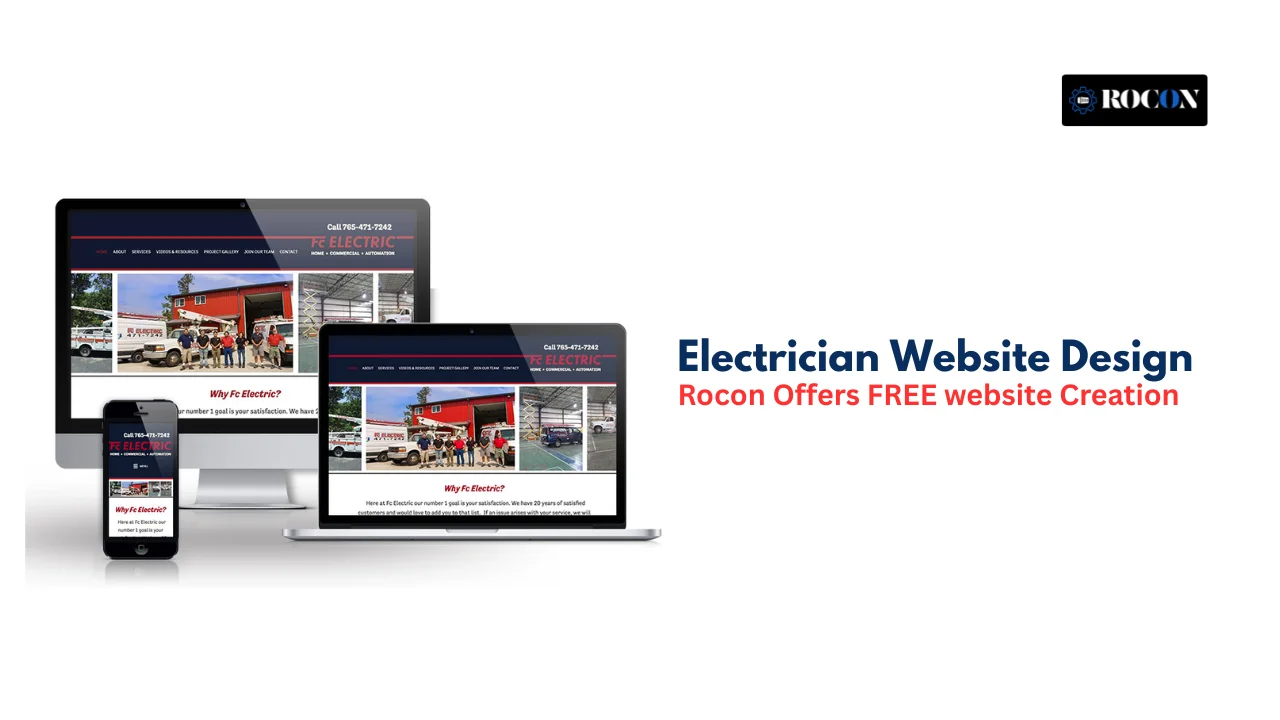


When someone needs an electrician, they usually aren’t browsing websites for fun. A breaker has tripped, an outlet has stopped working, or they need an electrician for a bigger project. They search Google, check a few businesses, and decide who to call.
That’s where web design for electricians matters. Your website needs to tell visitors what you do, where you work, why they can trust you, and how to contact you without making them hunt for the information.
A good electrician website puts services, service areas, reviews, licenses or certifications, real project photos, and clear contact options where customers can find them quickly. It should also work well on a phone, since many local service searches happen when someone needs help right away.
In this guide, we’ll look at what works in electrician website design in 2026, what an electrician website should cost, the pages and features worth including, 10 agencies that specialize in this type of work.
An electrician website can cost a few hundred dollars or several thousand, depending on who builds it, how much customization you need, and whether hosting and ongoing support are included.
Here’s a practical price range for the main options:
| Type of website | Typical price in India | Typical price in the US | Typical timeline |
|---|---|---|---|
| DIY builder (Wix, GoDaddy) | ₹500–₹2,500/month | $16–$50/month | You do the work |
| Freelance WordPress website | ₹8,000–₹25,000 + hosting | $500–$2,000 + hosting | 2–3 weeks |
| Local web design agency | ₹30,000–₹80,000 + hosting | $2,500–$8,000 + hosting | 4–6 weeks |
| Electrician-specialist agency | Not widely available | $3,000–$15,000 + monthly retainer | 4–8 weeks |
| Custom design agency | ₹1,00,000–₹3,00,000 + hosting | $10,000–$30,000 + hosting | 6–12 weeks |
| Managed service platform | Varies | $200–$500/month | 1–2 weeks |
These are planning ranges rather than fixed market rates. A 5-page local electrician website will usually cost much less than a custom site with online booking, service-area pages, customer portals, payment tools, or third-party integrations.
Skip the flashy effects. Your website needs to help customers understand your services, trust your business, and contact you without wasting time.
A phone number customers can find quickly. Put your phone number at the top of every page and make it clickable on mobile. Customers shouldn’t have to search for your number.
Clear emergency service information: If you provide emergency or 24/7 electrical service, say it clearly. If you work only during specific hours, display those hours so customers know what to expect.
License and insurance details: Show your electrical license, certifications, and insurance details where customers can find them. Requirements vary by location, so include the credentials that apply to your business.
The areas you actually serve: List the cities, neighborhoods, or areas you serve. Specific locations help visitors confirm you work nearby and give search engines clearer information about your local service coverage.
Real customer reviews: Add genuine customer reviews with names or locations when you have permission. Real feedback gives potential customers useful information about your work, service quality, and overall experience.
Clear services and pricing: List your main electrical services and include starting prices when possible. If each job requires a quote, explain what affects the final price for customers.
Mobile friendliness: Keep pages fast, navigation simple, and text easy to read on smaller screens. Customers should find important information without waiting or zooming around unnecessarily.
Simple contact options: Give visitors more than one way to reach you. Add a contact form, click-to-call button, WhatsApp, or SMS based on what customers commonly use.
Accurate local business information: Keep your business name, location, phone number, hours, and service area consistent across the website. Add relevant LocalBusiness structured data that matches visible information on your pages.
A complete Google Business Profile: Keep your profile updated with accurate business details, service areas, hours, photos, and reviews. Make sure the information matches your website so customers aren’t seeing conflicting details.
That’s the foundation. Everything else should support these basics, not distract from them.
Most electricians don’t need a large website. Six simple pages can give customers the information they need and make it easy to contact you.
That’s all most electricians need. Skip complicated features and focus on one goal: help customers understand your services and contact you quickly.
If you want an agency that understands electrical and home-service businesses, these 10 are worth considering. Most are based in the US, where trade-focused digital agencies are more common.
Blue Corona focuses on home-service businesses and uses call tracking, analytics, and lead reporting. Best for larger electrical companies that want detailed marketing data.
Scorpion works with franchises and multi-location service businesses. Its website, marketing, and reporting services fit electrical brands managing several locations.
Hook Agency specializes in contractor marketing, custom websites, and content. Best for electrical companies that want a stronger brand and a more customized website.
Contractor Gorilla focuses on websites for contractors and home-service companies. Best for smaller electrical businesses that want a trade-focused website without a long design process.
Thrive provides web design alongside SEO, PPC, social media, and other digital services. Best for electrical companies that prefer one agency for several marketing needs.
Townsquare Interactive provides website and digital marketing services through monthly plans. Best for newer electrical businesses that want ongoing support with a predictable budget.
WebFX handles web design, SEO, PPC, content, and other digital marketing services. Best for growing electrical companies that need broader marketing support from one team.
1SEO focuses heavily on SEO, paid advertising, and lead generation. Best for electricians who rely on Google search and paid campaigns to bring in new customers.
Footbridge Media works with home-service businesses and provides websites and marketing support. Best for electricians looking for flexible service without a long-term agency commitment.
Built-Right Digital focuses on websites and digital marketing for contractors and trades. Best for electrical companies that want a website built around leads, local search, and conversions.
Rocon is a WordPress hosting company that includes a free website build with every hosting plan. You pay for hosting, and our team builds your electrician website at no separate development cost.
A custom electrician website in the US can commonly cost around $1,500 to $5,000+ when purchased separately. With Rocon, the website build is included with your hosting plan, so there is no separate design or development fee.
The process takes five steps.
Pick any Rocon hosting plan that fits your website needs. The free WordPress website build is included with every plan.
After purchasing your plan, contact our team through your dashboard and let us know you need a website for your electrical business.
We schedule a 30 to 45-minute call to discuss your services, service areas, license details, branding, and the types of electrical jobs you want to attract.
Our developers build your site in WordPress using a suitable theme, custom HTML and CSS where needed, and key electrician website elements such as click-to-call, WhatsApp, service pages, reviews, LocalBusiness schema, and emergency service pages.
Your website is delivered on Rocon hosting for review. We make one round of revisions based on your feedback, then publish the finished site when you’re ready.
You pay for your Rocon hosting plan, while the website development is included. There is no separate development invoice or additional hosting provider to manage.
The free build covers the core pages and features an electrical business needs to get online and generate calls, quote requests, and local leads. There is no separate website development fee with the included build.
A typical electrician website project can involve separate costs for design, development, hosting, SSL, and ongoing support. Rocon combines the website build and hosting into one plan, so you pay for hosting without a separate website development fee.
| What You Get | Typical Designer | Rocon |
|---|---|---|
| Website build | $1,000 to $5,000+ | Included with hosting |
| WordPress hosting | $5 to $50/month separately | Included with hosting |
| SSL certificate | May cost extra | Included |
| Website and hosting | Usually handled by separate providers | Managed by one team |
| Post-launch support | Often billed separately | Included while hosting |
| LocalBusiness schema | May require additional setup | Included in the build |
| Emergency service page | May cost extra to add | Included in the build |
| Website backups | May require a paid service | Automated daily backups |
| Typical turnaround | Around 3 to 8 weeks | Around 2 to 4 weeks |
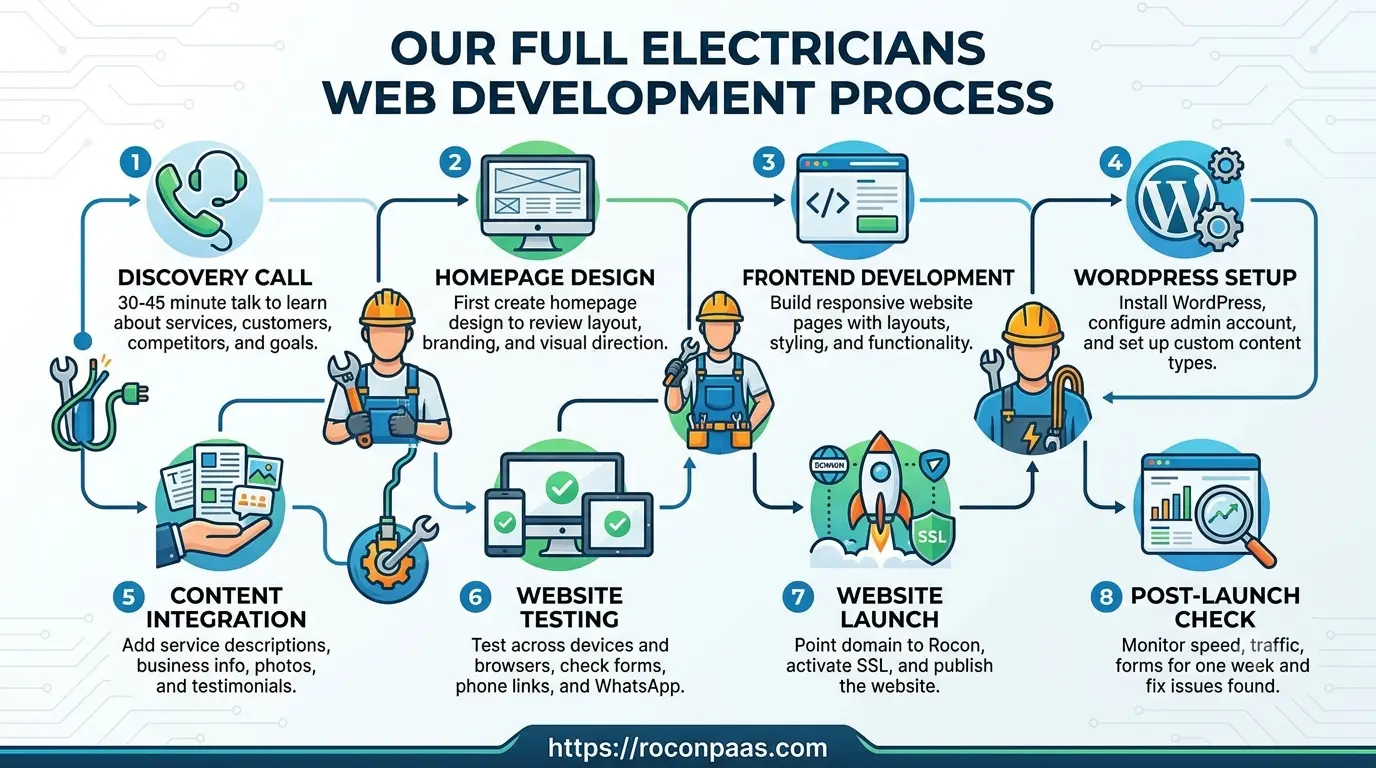
The 7-step overview gives you the basic flow. Here’s what happens behind the scenes, from the first call to the final post-launch check.
A good electrician website should make it easy for people to understand your services, trust your business, and contact you. Clear service pages, real project photos, customer reviews, mobile-friendly design, and local SEO all help turn website visits into calls and quote requests.
You don’t need a large website to get started. A well-planned WordPress site can give a solo electrician or growing electrical company a professional online presence without the cost of a large custom build.
Rocon includes the website build with its WordPress hosting plans, so you can get the site developed without paying a separate $1,000 to $5,000+ website development fee typically seen for many small-business projects in the U.S.
If you already have a website, use the points in this guide to find areas that need work. If you’re starting from scratch, focus on the pages and features that help customers find your services and contact you quickly.
Professional electrician website design in the U.S. can commonly cost $1,000 to $5,000+, depending on the number of pages, design requirements, content, and features. Rocon includes the standard website build with its WordPress hosting plans at no separate development cost.
Yes. WordPress works well for electrician websites because you can add service pages, location pages, reviews, galleries, contact forms, and new services as the business grows. It also gives you control over your website content without rebuilding the entire site.
A standard electrician website can take around 2 to 4 weeks to complete, depending on the number of pages, services, locations, revisions, and content provided. Custom websites with more complex features can take longer.
Most electrician websites need a homepage, services page, individual service pages, about page, service areas page, emergency services page, reviews section, and contact page. The exact structure depends on the services and locations you target.
Yes. You can keep your existing domain when moving to a new website or hosting provider. Rocon can help migrate your WordPress website and connect your existing domain to the new hosting setup.
Yes. An outdated electrician website can be rebuilt with a new WordPress design while keeping important business information and content. Rocon can also migrate an existing website to its hosting if you only need better hosting.

Elevate your WordPress hosting with 30-day money-back guarantee, free migration, and 24/7 support.
Sign Up Today
September 28, 2026
Nitish

Before You Go… Get 1 Month FREE on Rocon Hosting!

Experience lightning-fast speeds

No downtime or hidden fees

Dedicated 24/7 expert support

Leave a Reply